
Last updated November 14, 2026
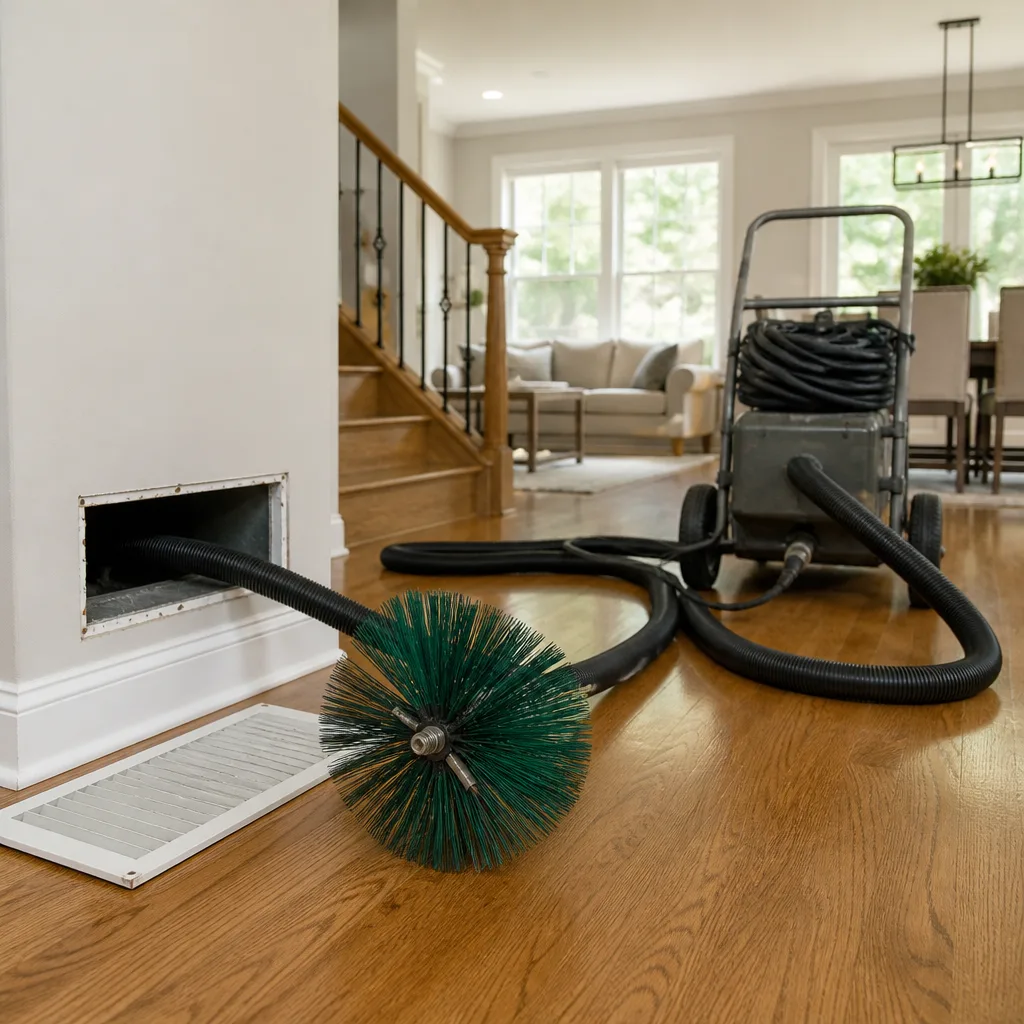 Whole-home duct cleaning
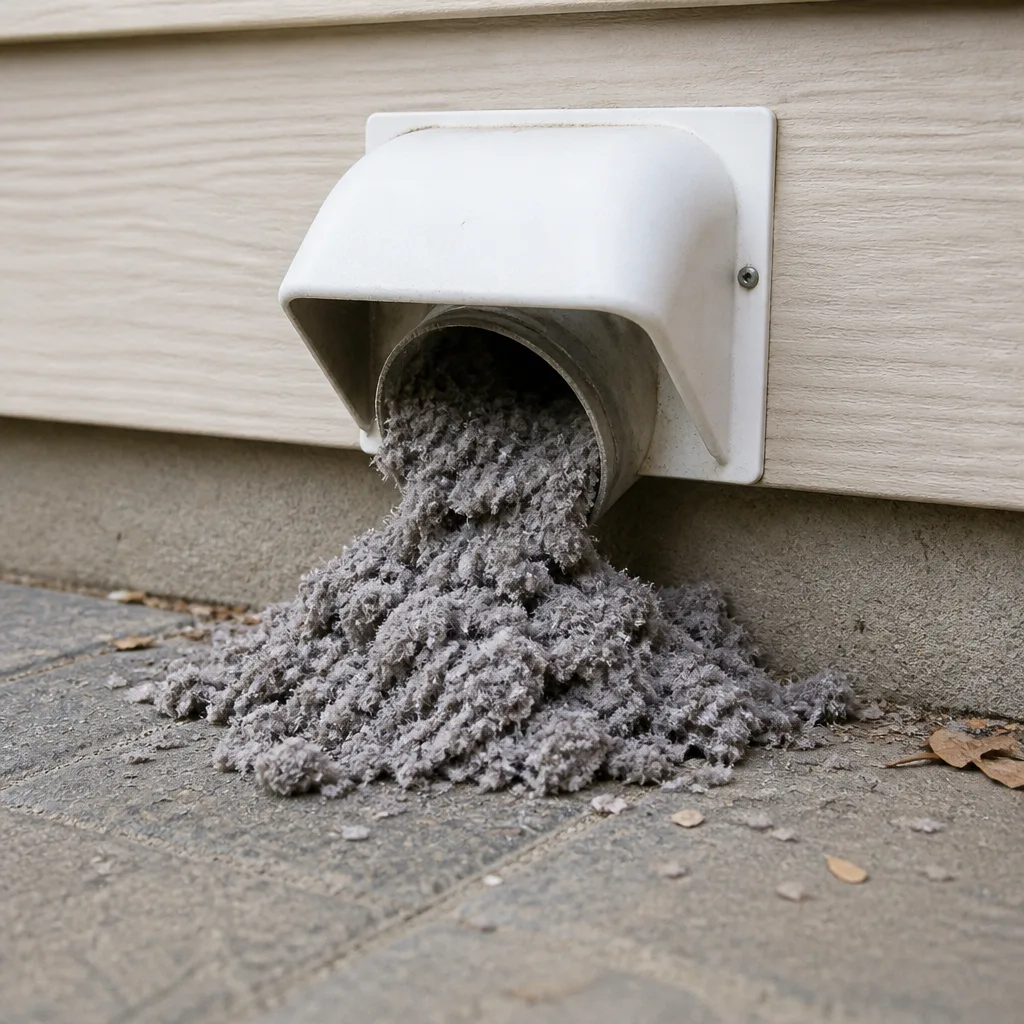 Dryer vent cleaning
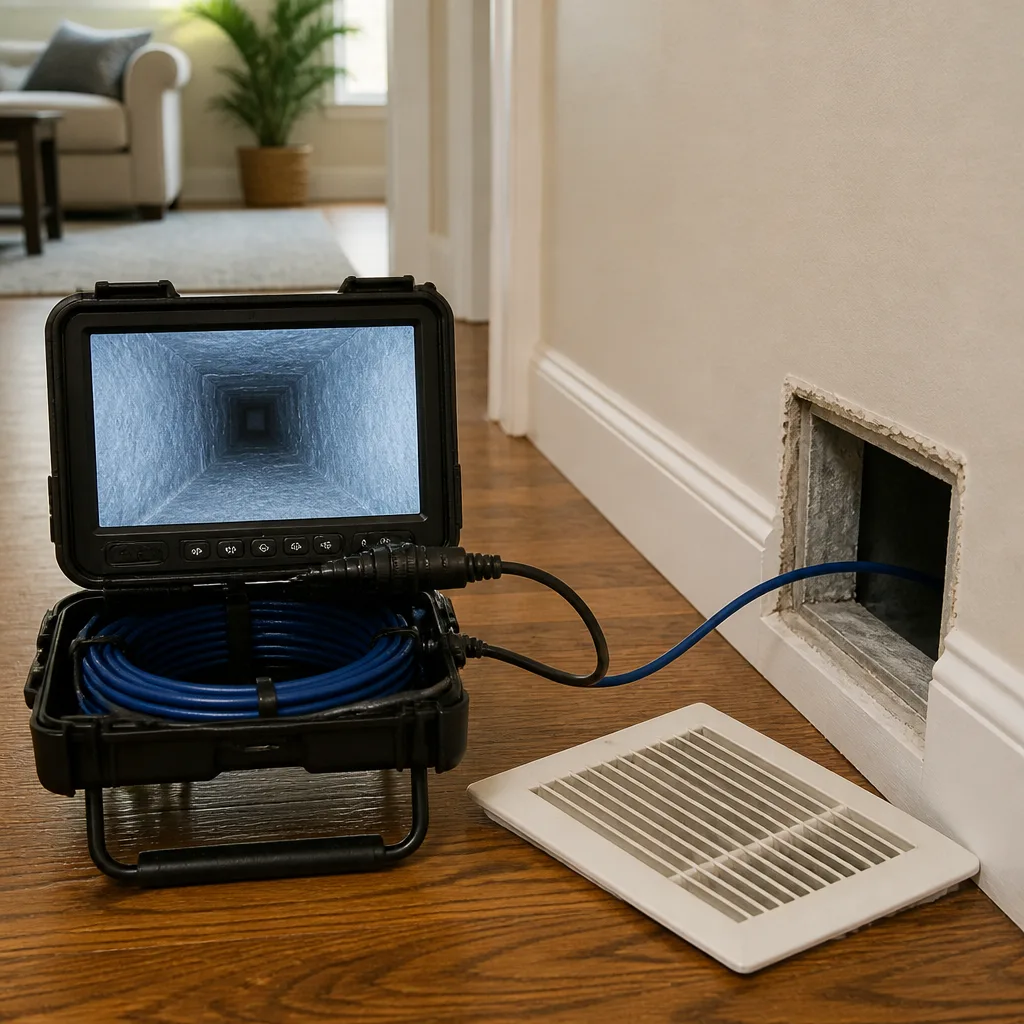 Camera inspection
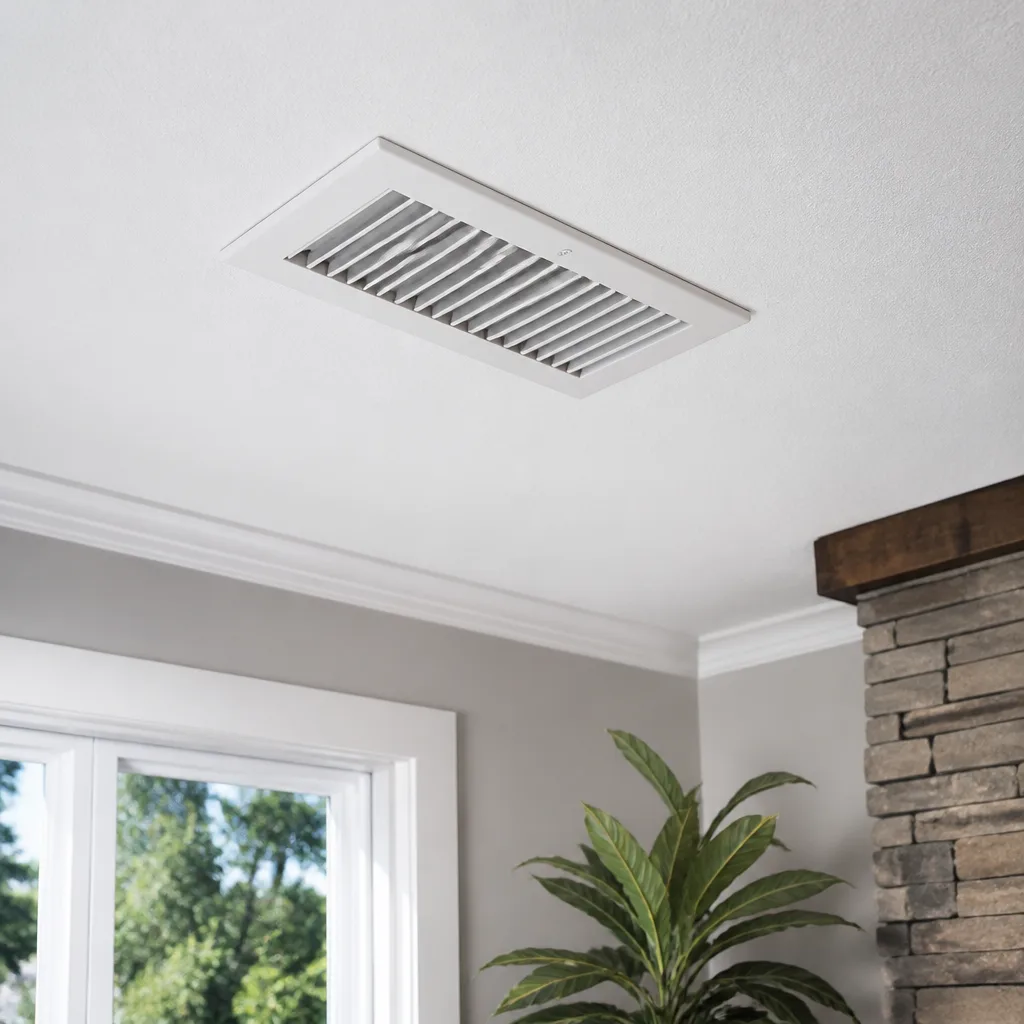 Sanitizing & deodorizing
Whole-system duct and dryer vent check with before-and-after photos - you see exactly what came out of your vents
That "$99 whole-house special" is a bait ad - the real number appears once they are in your hallway, or the "clean" is a shop-vac at the register. We photograph the inside of your ducts before and after instead.
Air Duct Cleaning Emergency Preparedness Guide for North Las Vegas Homes
Most emergency preparedness guides for North Las Vegas homes talk about flash floods, extreme heat, and power outages. They rarely mention what happens inside your air ducts after a haboob or a regional fire. Fine desert particulate doesn’t just settle on your patio furniture. It gets pulled into your HVAC return, pushed through the air handler, and distributed through every supply vent in the house. This guide covers the two HVAC emergencies that hit the Las Vegas Valley hardest: post-haboob particulate loading and post-fire smoke infiltration. You’ll learn what to do in the first 48 hours, when to shut your system down, what to document for insurance, and why duct integrity determines how bad the damage actually gets.
Quick Answer
Air duct cleaning as an emergency response in North Las Vegas means addressing rapid particulate loading after a haboob or smoke intrusion after a regional fire, not routine maintenance. The first step is always to assess filter condition and decide whether to shut the system down or run it on recirculation only. Post-event duct cleaning requires containment and true extraction, using equipment like Rotobrush brush systems paired with Nikro HEPA vacuums, because the debris load is orders of magnitude heavier than normal household dust.
Styles & brands we work with
- Whole-home duct cleaning
- Dryer vent cleaning
- Camera inspection
- Sanitizing & deodorizing
Table of Contents
- What a Haboob Does to a Duct System
- The First 48 Hours: Post-Haboob Response Protocol
- Smoke and Char Infiltration After Regional Fire Events
- The HVAC Shutdown Decision: When to Kill the System
- What to Document for Insurance Before Any Cleaning
- How Duct Integrity Determines Emergency Severity
- Why Repair-Ready Contractors Matter When Speed Counts
- Common Mistakes to Avoid
What a Haboob Does to a Duct System
Haboobs are massive walls of dust that sweep across the Mojave Desert and into the Las Vegas Valley, sometimes reducing visibility to near zero in minutes. The particulate in a haboob is not the same as the dust that accumulates on your bookshelf over a month. It’s fine, abrasive, and incredibly mobile. Silica and clay particles, pulverized by decades of desert wind, measure small enough to stay suspended in air for hours after the wall passes.
Your HVAC filter is the first line of defense. A standard 1-inch fiberglass filter catches larger particles but lets the fines through. During a haboob, the filter can load so quickly that airflow drops dramatically. When airflow drops, the system works harder, the coil gets colder, and condensation increases. That wet coil surface becomes a trap for the fines that do get past the filter. What builds up on the coil and in the supply plenum over the following days is a cement-like slurry of desert dust and moisture. Once it dries, it breaks free in chunks and gets blown into rooms or lodges in duct branches.
For homes in North Las Vegas neighborhoods like Aliante, El Dorado, or downtown near Lake Mead Boulevard, the local soil composition includes a high percentage of alkaline clay. That matters because alkaline dust is slightly corrosive to galvanized duct surfaces when it sits in a damp environment. A duct system that was clean before a haboob can develop visible film on the interior walls within two weeks of a major dust event if the filter was not changed promptly.
Filter Efficiency and Desert Dust
A filter rated MERV 8 will capture a meaningful percentage of haboob particulate, but only until it loads. What catches people off guard is how fast that loading happens. In a dense dust event, a filter that would normally last 90 days can plug in under an hour. When the filter plugs, two things happen. The pressure drop across the filter increases, which strains the blower motor. And any gap in the filter rack, any poorly seated filter, becomes a bypass path. Unfiltered air goes around the filter, straight into the blower, and out through the ducts.
After a severe haboob, we recommend inspecting the filter before you do anything else. If it’s caked, replace it. If it’s bowed inward, the pressure drop was high enough to deform the media, and you should check the blower wheel for dust accumulation as well.
The First 48 Hours: Post-Haboob Response Protocol
The window after a haboob is critical because fine dust does not stay put. It migrates. What’s in the return duct today will be in the supply branches tomorrow, and what’s in the supply branches will be in your living room by the weekend. The goal in the first 48 hours is to stop the migration before it spreads deeper into the system.
- Do not run the system on auto. If the HVAC is set to auto, the blower will cycle on and off as the thermostat calls for cooling. Each cycle pushes dust further into the ducts. Either shut the system off at the thermostat or switch the fan from auto to off until you’ve assessed the situation.
- Inspect and replace the filter. Pull the filter and look at it. If it’s loaded with desert dust, replace it with a fresh one. If you don’t have a replacement, keep the system off until you do. Running without a filter is worse than running with a dirty one.
- Check return grilles and supply registers. Wipe the exterior grilles with a damp cloth. Look for dust streaks on the wall around supply registers. That streak pattern tells you dust is bypassing the filter or leaking around the register boot.
- Run the fan on recirculation only, if you must run it at all. If indoor temperatures are climbing and you need airflow, switch the system to fan-only mode with a clean filter installed. This circulates air without bringing in outdoor dust. Do not open windows. Do not run the AC compressor if the outdoor coil is caked with dust.
- Schedule a professional assessment. If the event was dense enough to block visibility, the dust load inside your ducts is not something a vacuum cleaner can handle. Professional air duct cleaning with brush-and-extract equipment is the reliable way to remove the load.
North Las Vegas homes with rooftop package units face an additional concern. The outdoor condenser coil gets blasted with dust during a haboob. If that coil is caked, system efficiency collapses and the compressor runs hotter than it should. Rinsing the coil gently with a garden hose, with power to the unit disconnected, helps, but only after the dust has stopped falling.
Smoke and Char Infiltration After Regional Fire Events
Wildfire smoke behaves differently from desert dust. It’s not just particulate. It’s a complex mixture of gases, volatile organic compounds, and microscopic carbon particles. Some of it is acidic. Much of it is sticky. When smoke gets pulled into a duct system, it doesn’t just settle. It deposits onto surfaces and, in some cases, bonds to the existing dust film, creating a residue that routine duct cleaning does not remove.
Post-fire duct cleaning is categorically different from maintenance cleaning. The chemistry of smoke residue requires a different approach. Carbon particles are fine enough to lodge in surface irregularities in the duct material. The sticky fraction acts like a glue, holding the carbon in place. A simple vacuum pass won’t pull it off. You need mechanical agitation, which is why the Rotobrush rotating-brush system is suited to this work. The rotating brush physically breaks the bond between the residue and the duct wall, while the Nikro HEPA vacuum creates negative pressure to capture what the brush dislodges.
Containment also matters more after a fire event. If the cleaning process isn’t contained, the agitation releases captured smoke particles back into the living space. That’s a health concern and a comfort problem. The containment approach used in professional abatement, applied to residential ductwork, involves sealing the registers and running the system under negative pressure during cleaning. Abatement Technologies equipment is designed for exactly this kind of controlled extraction. Once the residue is in the duct, the only option is to remove it, not try to cover it with an odor masker.
Homes in North Las Vegas that are downwind of regional fire events, even fires 50 to 100 miles away, can experience smoke infiltration significant enough to require this level of response. Smoke travels. The high desert’s clear air means you notice it faster, but it also means the particles travel farther before dispersing.
The HVAC Shutdown Decision: When to Kill the System
The most common question after any air quality emergency is whether to run the HVAC or shut it down. The wrong answer makes things worse. The right answer depends on what’s in the air and where it came from.
Shut the system down completely when:
- There is visible smoke inside the home or the smell of smoke is strong.
- The filter is caked, and you don’t have a replacement.
- Outdoor dust is still falling and windows or doors must remain open.
- You suspect the return duct has pulled in ash or char from a nearby fire.
- The system has been running through a haboob and the blower is making unusual noise.
Run the system on fan-only recirculation when:
- The filter is new, and you want to move air through it to capture indoor dust.
- Outdoor dust has settled, and you’re trying to clear indoor air before a professional arrives.
- Indoor temperatures are unsafe, and you need airflow without drawing in outside air.
The mistake that makes contamination worse is running the AC compressor while the outdoor coil is clogged with dust. The compressor generates heat, the clogged coil can’t reject it, and the system runs at elevated head pressure. That’s hard on the compressor and doesn’t cool the house. In post-haboob conditions, check the outdoor unit before you switch the system back to cooling. If the coil looks like it’s wearing a coat of desert, don’t run it.
For North Las Vegas homes in the path of dense dust events, the safest immediate action is to shut the system off at the thermostat, replace the filter, and leave it off until a professional has inspected the duct interior. The compressor can wait. The ducts shouldn’t.
What to Document for Insurance Before Any Cleaning
If you’re dealing with a post-haboob or post-fire duct contamination event, and you plan to file an insurance claim, what you document before the cleaning starts matters as much as the cleaning itself. Insurance adjusters look for evidence of the event’s impact on the home’s systems, not just a receipt for cleaning.
- Photograph the filter before you remove it. Set the filter on a contrasting surface and photograph both sides. If it’s bowed or caked, get a close-up. The filter is your best physical evidence of particulate loading.
- Photograph the return grille before wiping it. Dust streaking around the grille edges shows the system was pulling unfiltered air. If the grille itself is loaded, photograph it in place.
- Photograph supply registers and surrounding surfaces. Dust streaks on walls or ceilings around supply vents indicate distribution of the contaminant. This is the pattern adjusters look for.
- Document the outdoor unit. If the condenser coil is caked with dust or ash, photograph it. Include a close-up of the coil fins.
- Note the date and time of the event. Write it down. If you have weather alerts or news coverage, save them. The timeline matters for claims.
- If you have air quality monitors, record the readings. Indoor particulate readings before cleaning and after cleaning create a before-and-after record that insurance companies respond to.
Do not attempt to clean the ducts yourself before documenting. Once you disturb the evidence, it’s harder to prove the event’s impact. Call a professional who can document the condition of the system as part of the service. The written estimate and the technician’s notes become part of your claim file. In our experience, insurance claims for duct cleaning after a documented weather or fire event are far stronger when the filter and register evidence is preserved.
How Duct Integrity Determines Emergency Severity
Two North Las Vegas homes can experience the same haboob and end up with very different duct conditions. The difference is duct integrity. A sealed system with tight joints, intact mastic, and properly connected boots resists infiltration. It pulls air through the return, through the filter, and through the supply runs without pulling in unfiltered air from the attic or crawlspace. A leaky system doesn’t.
Leaky return ducts are the worst-case scenario in a dust event. Every gap in the return side becomes an unfiltered intake. The blower pulls air from the attic, the wall cavity, or the crawlspace, and that air has not passed through the filter. During a haboob, a leaky return duct pulls in dust directly from the attic, where it entered through the roof vents. The filter never sees it. The supply ducts distribute it through the house.
Leaky supply ducts are a different problem. They blow conditioned air into the attic instead of the living space. In a dust emergency, they also pressurize the attic with contaminated air, which then finds its way back into the house through can lights, bath fans, and other ceiling penetrations.
This is why a contractor who offers Lancaster Duct Cleaning services that include repair is valuable when speed counts. If the emergency cleaning reveals compromised sections, you need those fixed in the same visit, not scheduled for a second contractor three weeks later. Air duct repair as a named service means the technician can address what they find immediately, whether it’s a disconnected boot, a collapsed flex run, or a gaping seam in the return plenum.
Why Repair-Ready Contractors Matter When Speed Counts
Most duct cleaning companies do one thing. They clean. If they find a problem, they note it, and you call someone else. In an emergency, that handoff costs time. North Las Vegas heat doesn’t wait while you schedule a second contractor. Dust doesn’t stop migrating while you get three repair bids.
A contractor who cleans and repairs ductwork in the same visit changes the economics of emergency response. The cleaning removes the contaminant load. The repair closes the path that let the contaminant in. Doing both on the same call means you’re not paying for a second diagnostic visit, and you’re not running a compromised system while you wait.
We run a Rotobrush brush system for mechanical agitation, paired with Nikro HEPA extraction for capture. The extraction side is what separates professional cleaning from the discount approach. Debris is removed, not redistributed. In a post-haboob or post-smoke situation, redistribution is exactly what you don’t want. The whole point is containment. We use Abatement Technologies equipment for negative-pressure control when the job calls for it, because the discipline of professional abatement applies directly to emergency duct response.
Lancaster Duct Cleaning keeps a narrow service scope by design. Air duct cleaning, dryer vent cleaning, and air duct repair. No general HVAC installation. No handyman work. When a North Las Vegas homeowner is dealing with an emergency, they get a specialist who works on air duct systems all day, not a generalist treating ducts as a side job.
Common Mistakes to Avoid
- Running the AC with a caked filter. This loads the coil with dust, creates a damp slurry, and strains the blower. Replace the filter first, always.
- Assuming the filter caught everything. Even a clean filter only catches what passes through it. Leaky returns bypass the filter entirely, pulling unfiltered attic or crawlspace air into the system.
- Spraying disinfectants or deodorizers into the ducts. After smoke events, homeowners sometimes try to mask the smell with sprays. That adds chemicals to the residue without removing it. The residue has to go, not get covered.
- Cleaning registers with a household vacuum. A standard vacuum doesn’t have the suction or filtration to handle fine desert particulate. It can blow the dust back into the room or through the vacuum exhaust.
- Ignoring the outdoor unit after a haboob. The condenser coil collects dust just like the indoor components. Running the AC with a clogged coil reduces efficiency and shortens compressor life.
- Delaying documentation for insurance. Once you clean the filter, wipe the registers, or replace anything, the evidence is compromised. Photograph everything before you touch it.
- Hiring a maintenance-only cleaner for an emergency job. Emergency response needs extraction equipment and containment discipline, plus repair capability if the event exposed duct damage. The cheapest maintenance bid won’t hold up under that load.
See the difference
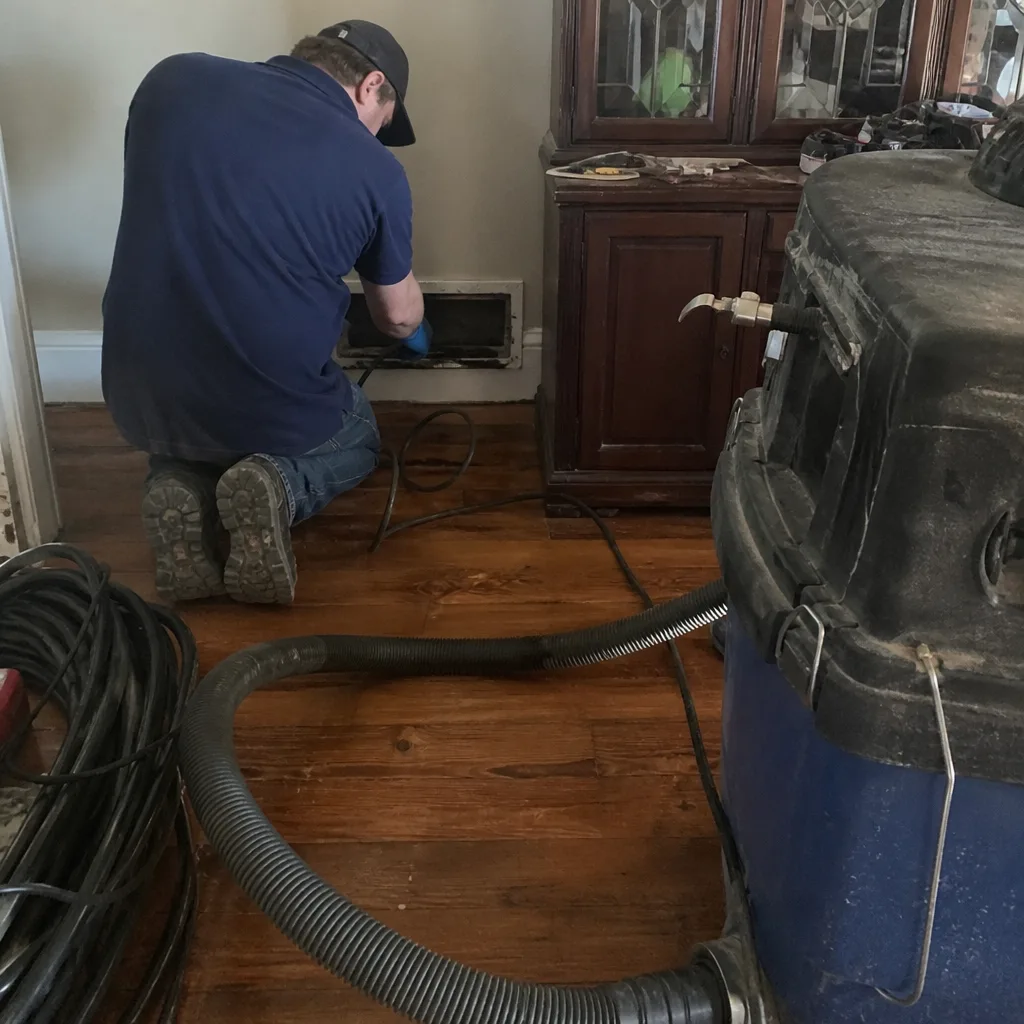 Before
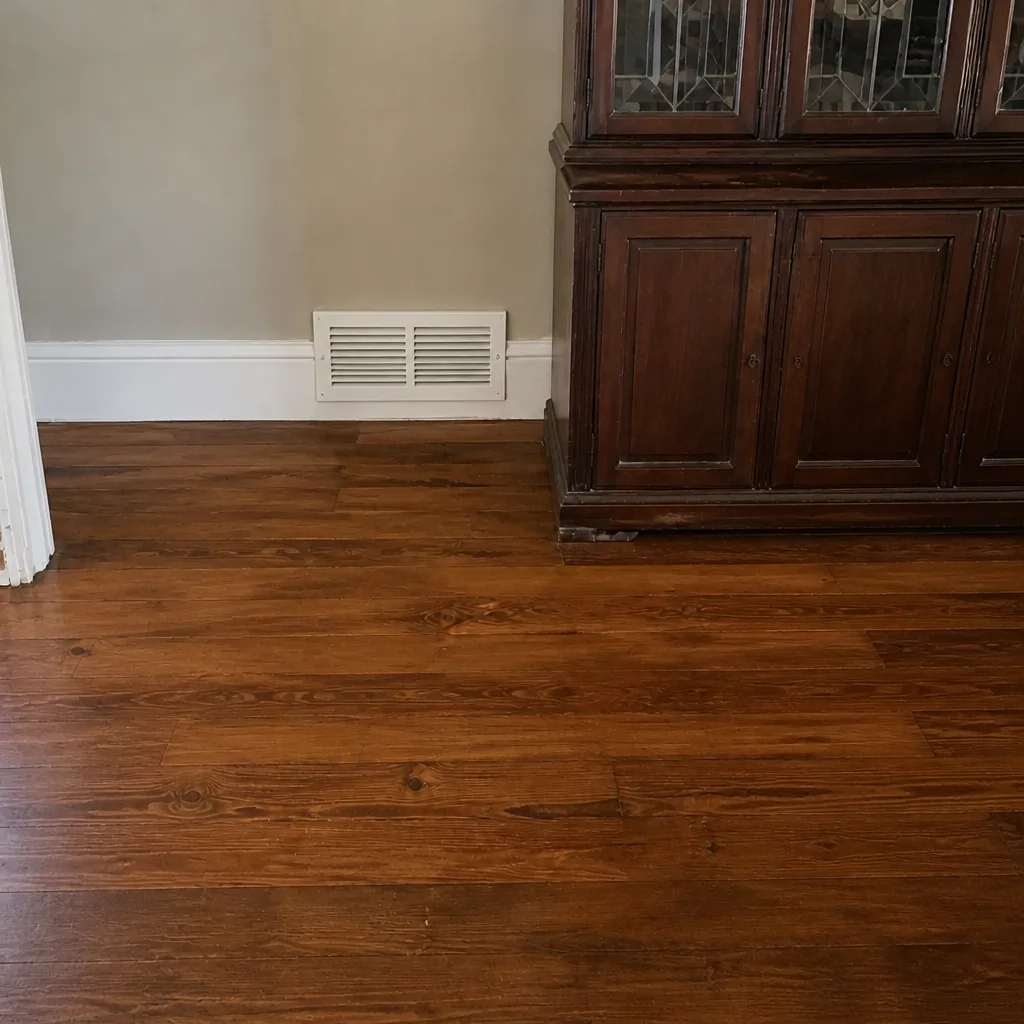 After
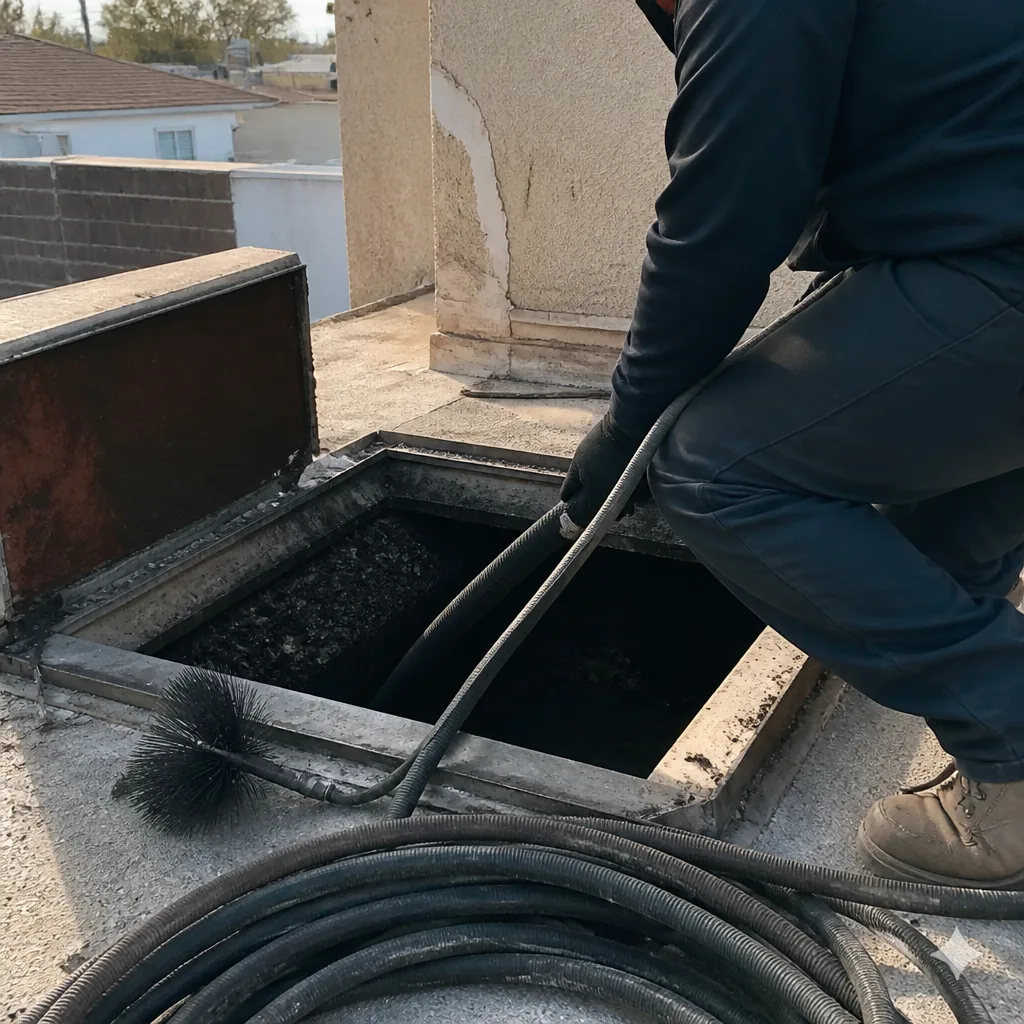 Before
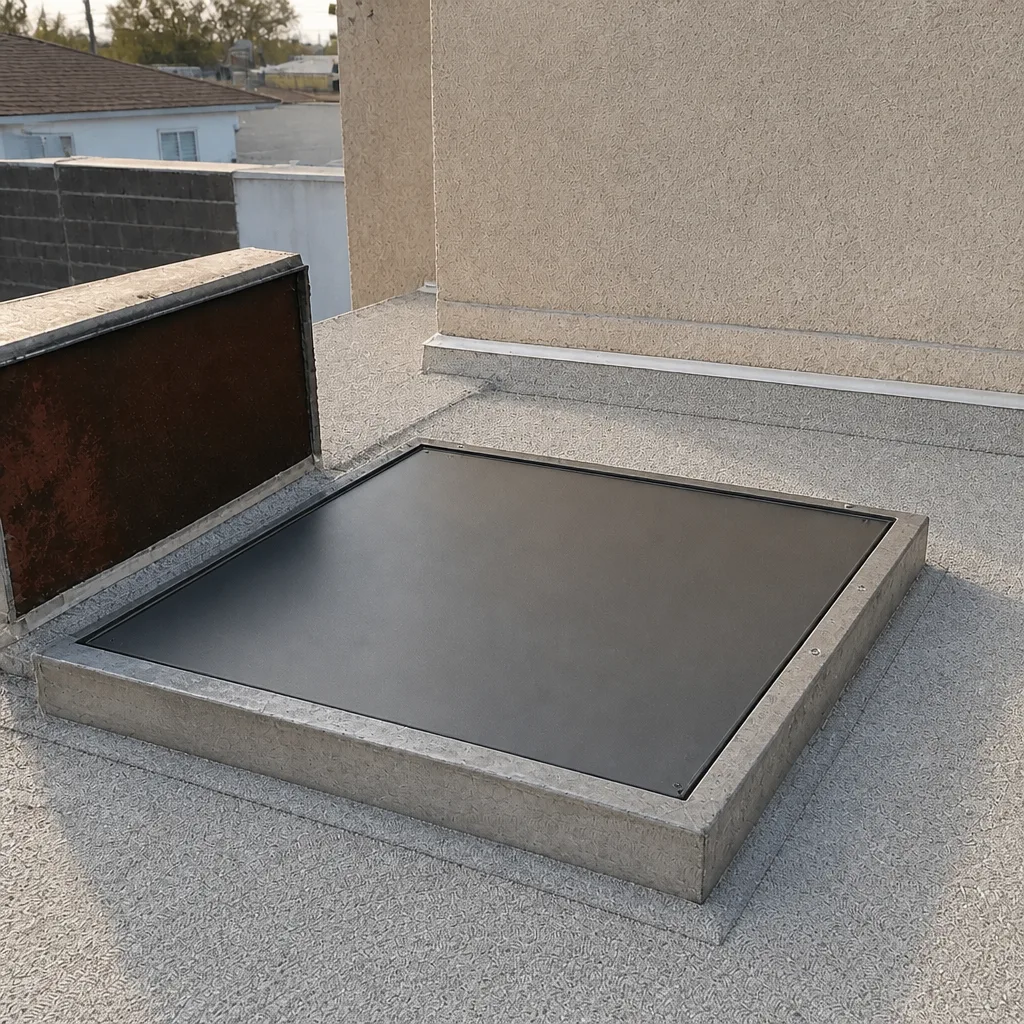 After
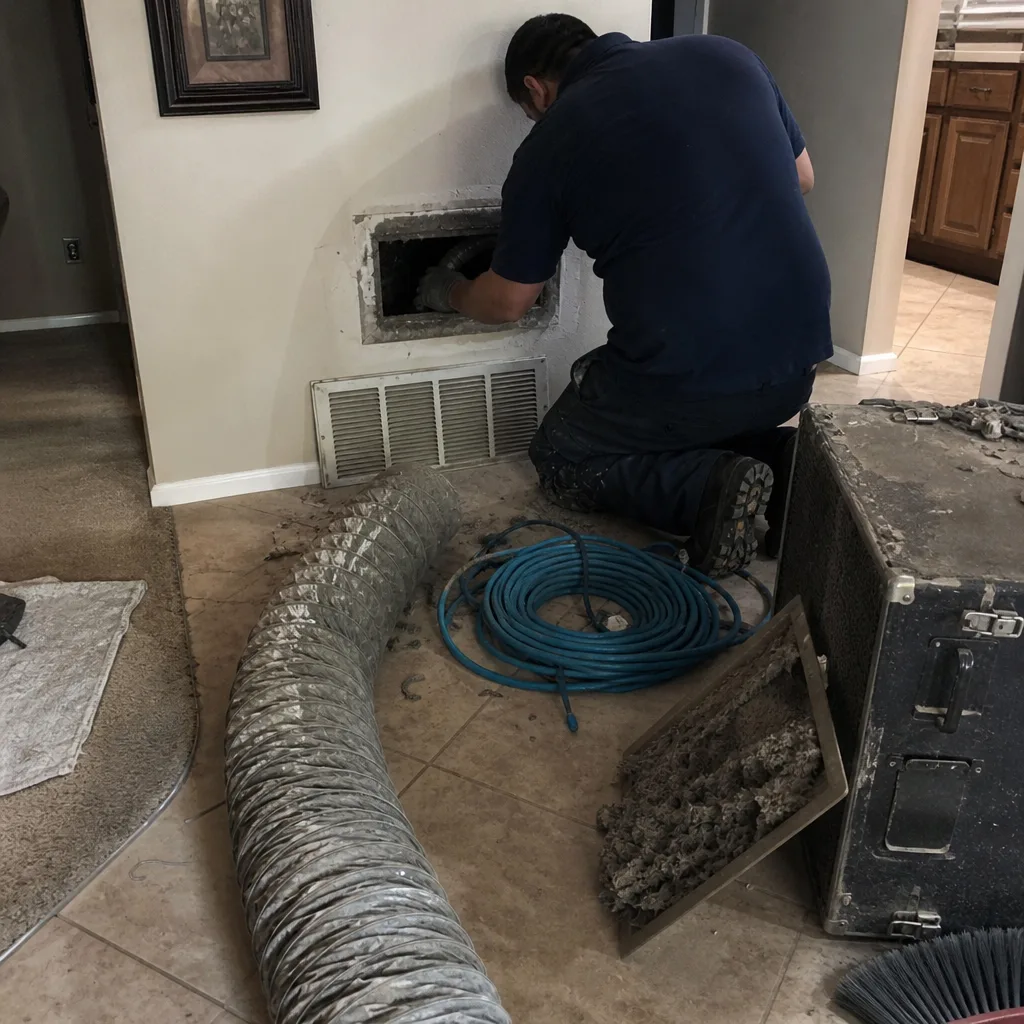 Before
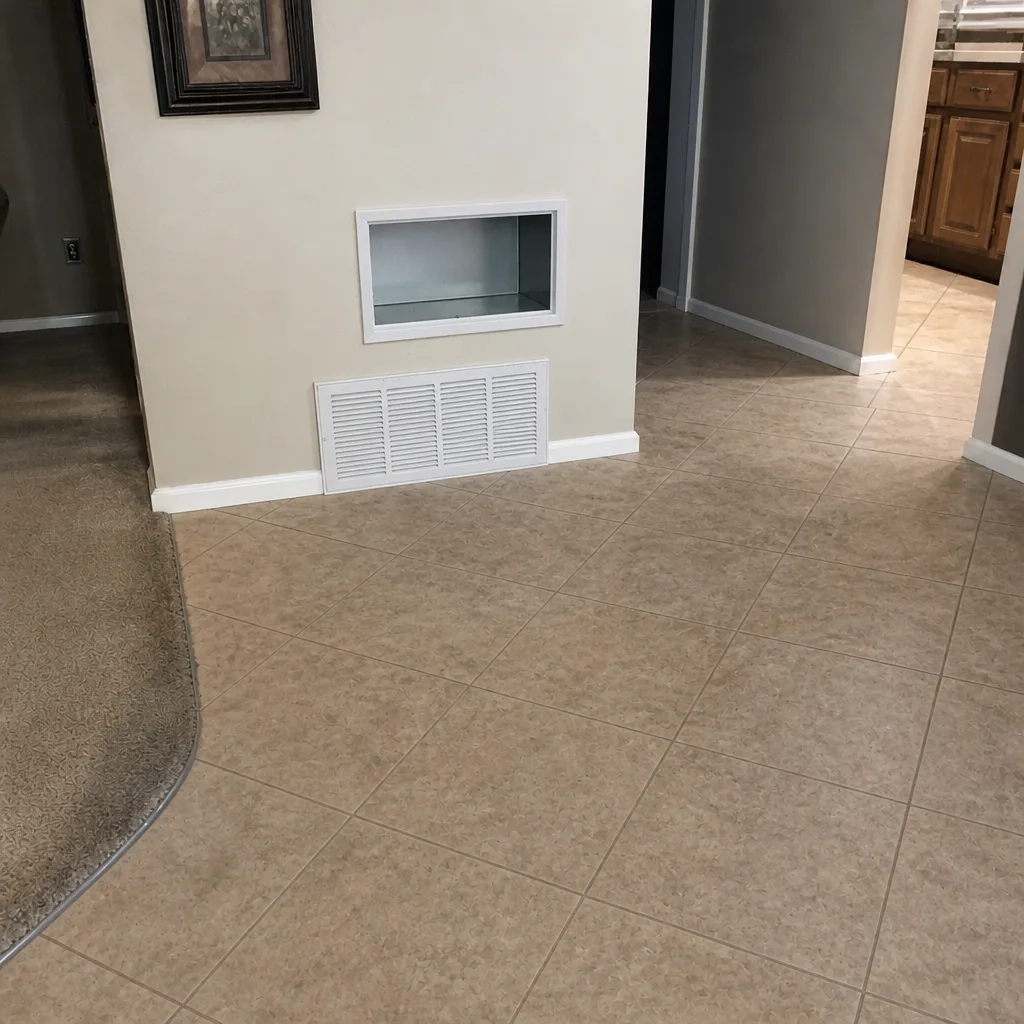 After
When to Call a Professional
Call a professional when the filter has caked during a weather event, when smoke residue is visible on registers, when dust streaks appear around supply vents, when the system’s airflow has dropped noticeably, or when you suspect duct damage after a severe dust event. If you’re in North Las Vegas and the haboob was dense enough to block visibility, your ducts are carrying a load that household equipment won’t remove. Lancaster Duct Cleaning offers free estimates in North Las Vegas, call (866) 942-9753. We answer 24/7. Fast dispatch from 7am to 7pm, Sunday through Friday.
Frequently Asked Questions
Emergency air duct cleaning in North Las Vegas is priced per job by the written estimate, because the debris load and system condition vary widely from one event to another. A system contaminated by a haboob or a regional fire event requires heavier extraction than routine cleaning, and the estimate reflects that. Call (866) 942-9753 for a free estimate. The price is set before work starts, and the written estimate is the final word.
Smoke smell in air ducts comes from residue deposited on duct surfaces, and the only reliable way to remove the smell is to remove the residue. A professional cleaning with mechanical agitation, typically a Rotobrush brush system paired with Nikro HEPA extraction, breaks the residue free and captures it under negative pressure. Odor masking doesn’t work because the source remains.
A post-haboob duct cleaning in a typical North Las Vegas home takes longer than routine cleaning because the debris load is heavier, but most residential jobs are completed in a single visit. The time depends on the size of the system, the number of returns and registers, and whether duct repair is needed after the cleaning. The estimate outlines the scope before the equipment rolls.
Do not run the AC compressor after a haboob until you’ve checked the outdoor coil. If the coil is caked with dust, running the compressor makes the system work harder and shortens its life. You can run the fan on recirculation with a clean filter, and that’s a reasonable stopgap until a professional can inspect the ducts.
Homeowners insurance may cover duct cleaning after a documented fire or weather event, but the claim depends on documentation. Photograph the filter, registers, and outdoor unit before anything is cleaned or replaced. A professional assessment that documents the duct condition strengthens the claim. Ask your insurer what your policy covers before scheduling.
Before-and-after photos of the duct interior are the standard for verification. A professional cleaner using HEPA extraction equipment can show what the duct looked like on arrival and what it looked like at completion. If a contractor won’t show you the interior before and after, that’s a red flag. Call (866) 942-9753 for a free estimate on emergency duct cleaning in North Las Vegas.
The Bottom Line
North Las Vegas homes face HVAC emergencies that most national preparedness guides ignore. Haboobs load ducts with fine desert particulate in hours, and regional fire events deposit residue that routine cleaning won’t remove. The right response is a shutdown decision based on filter and coil condition, documentation before any work begins, and a professional cleaning that uses true extraction with containment. Duct integrity determines how badly an event hits, and repair-ready contractors solve the full problem in one visit. Lancaster Duct Cleaning serves North Las Vegas with the equipment and scope to handle emergency duct response correctly.
Written by the team at Lancaster Duct Cleaning, serving North Las Vegas since 2013.