
Last updated November 14, 2026
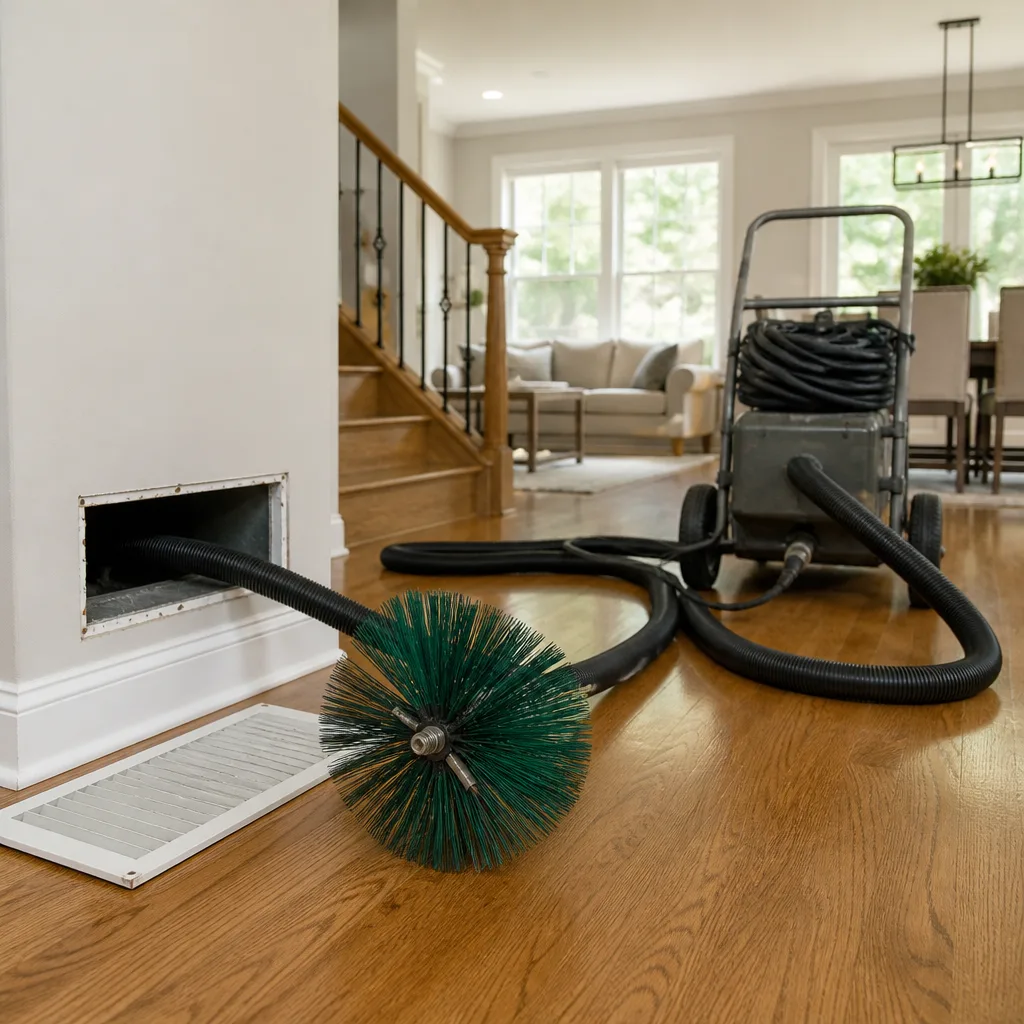 Whole-home duct cleaning
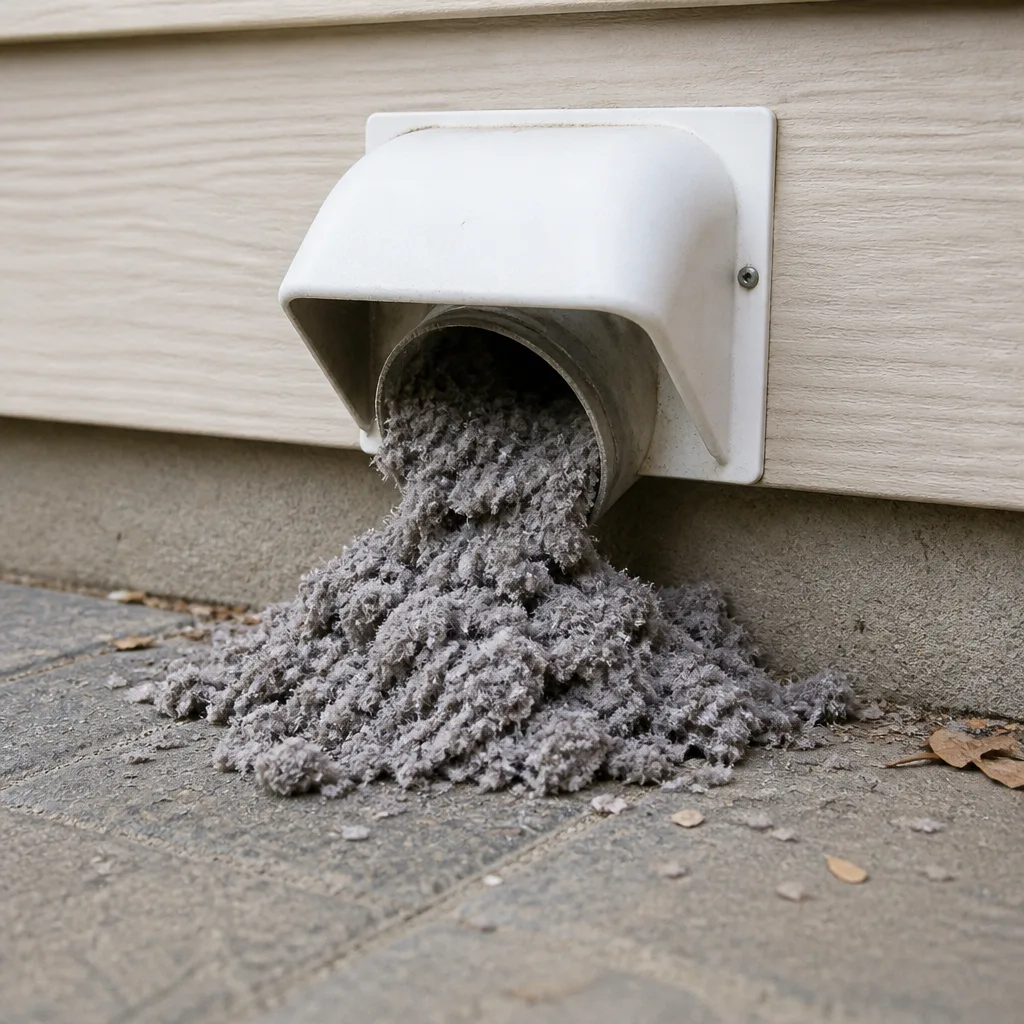 Dryer vent cleaning
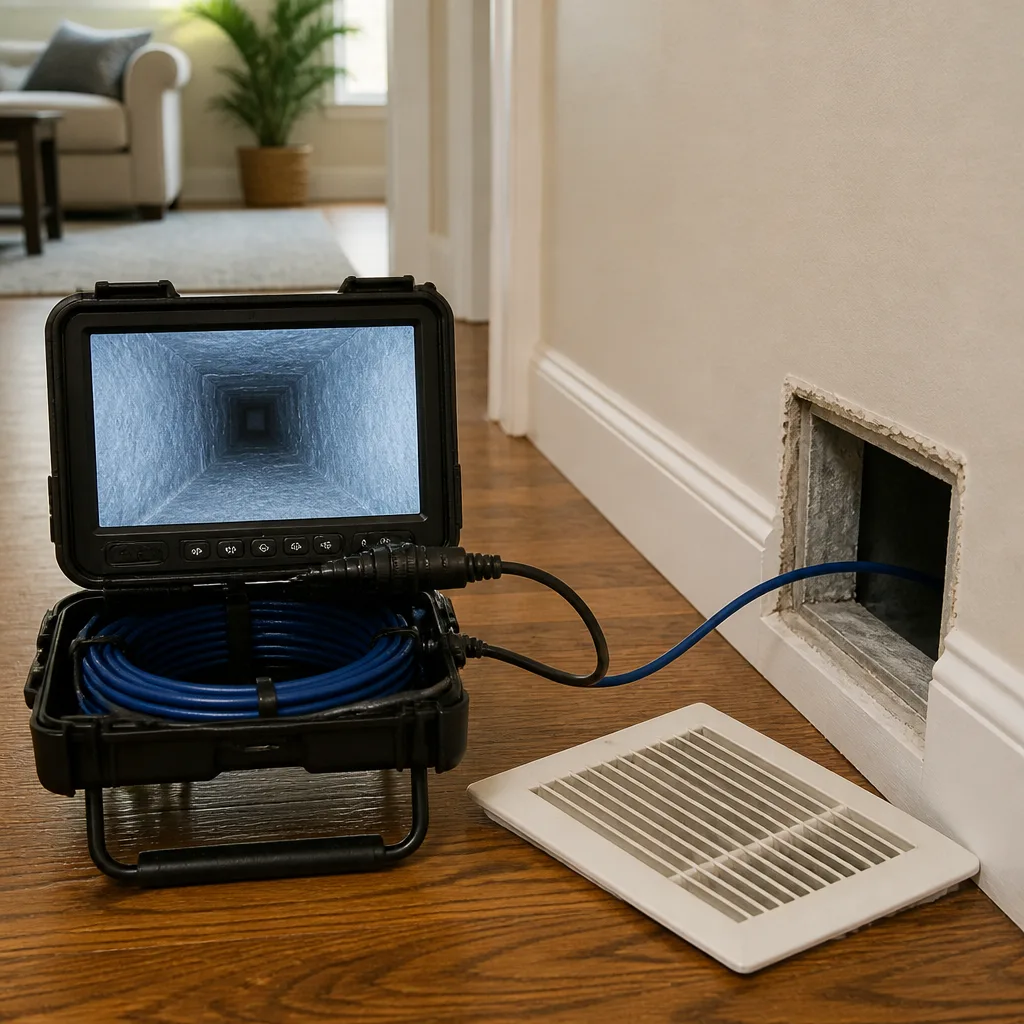 Camera inspection
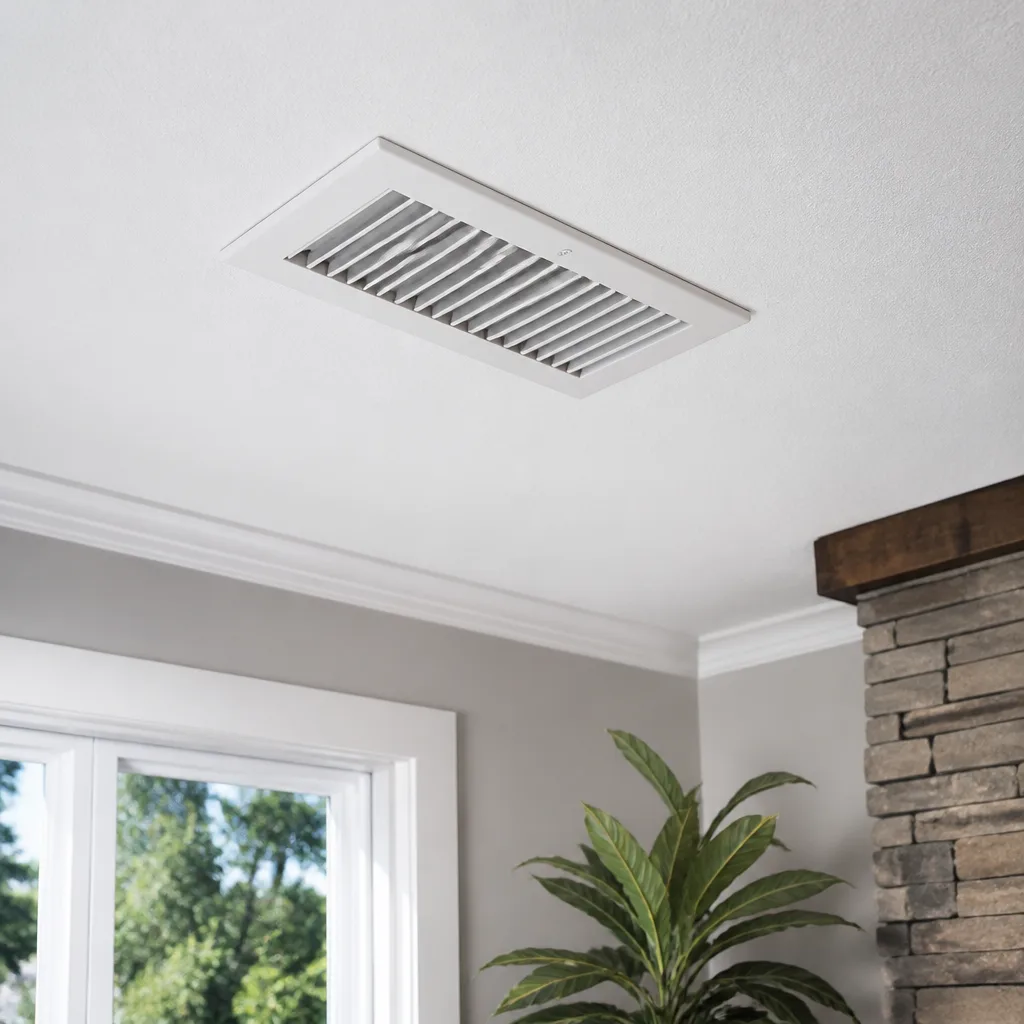 Sanitizing & deodorizing
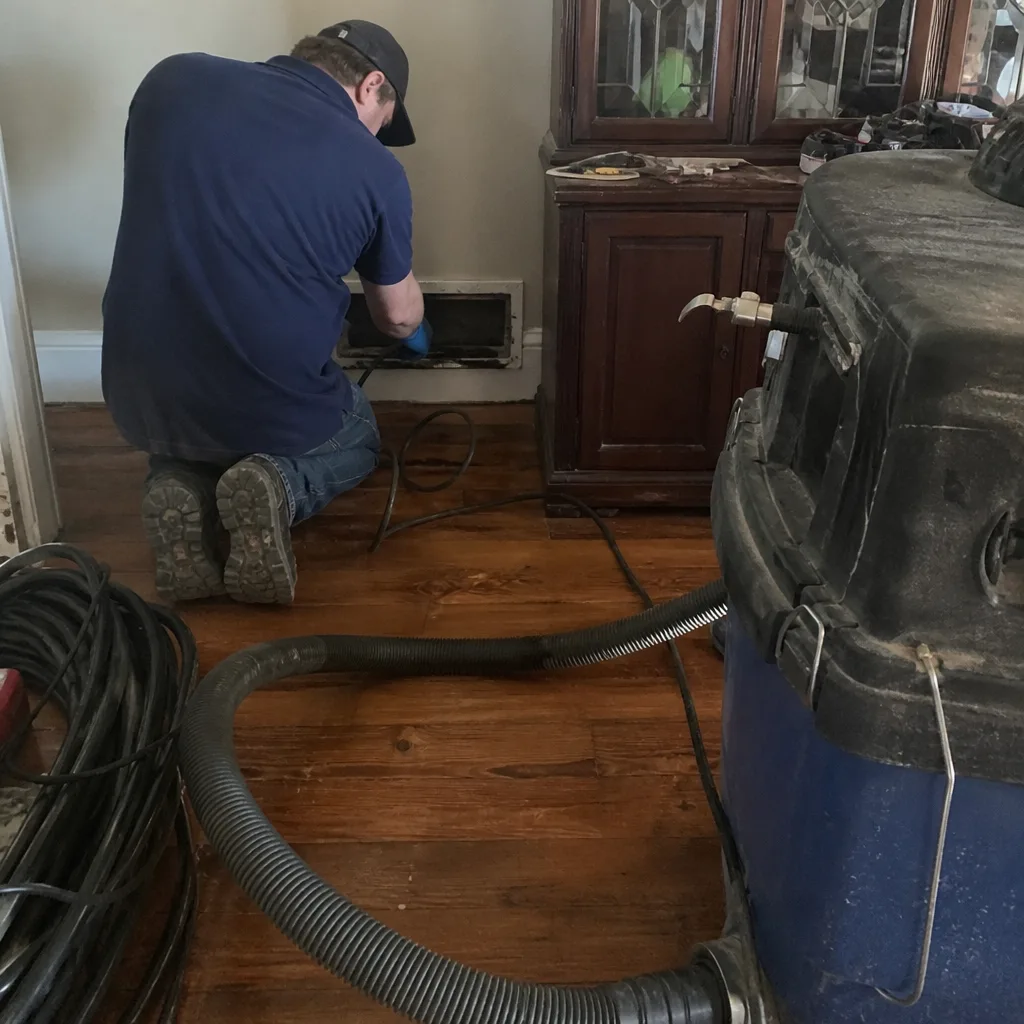
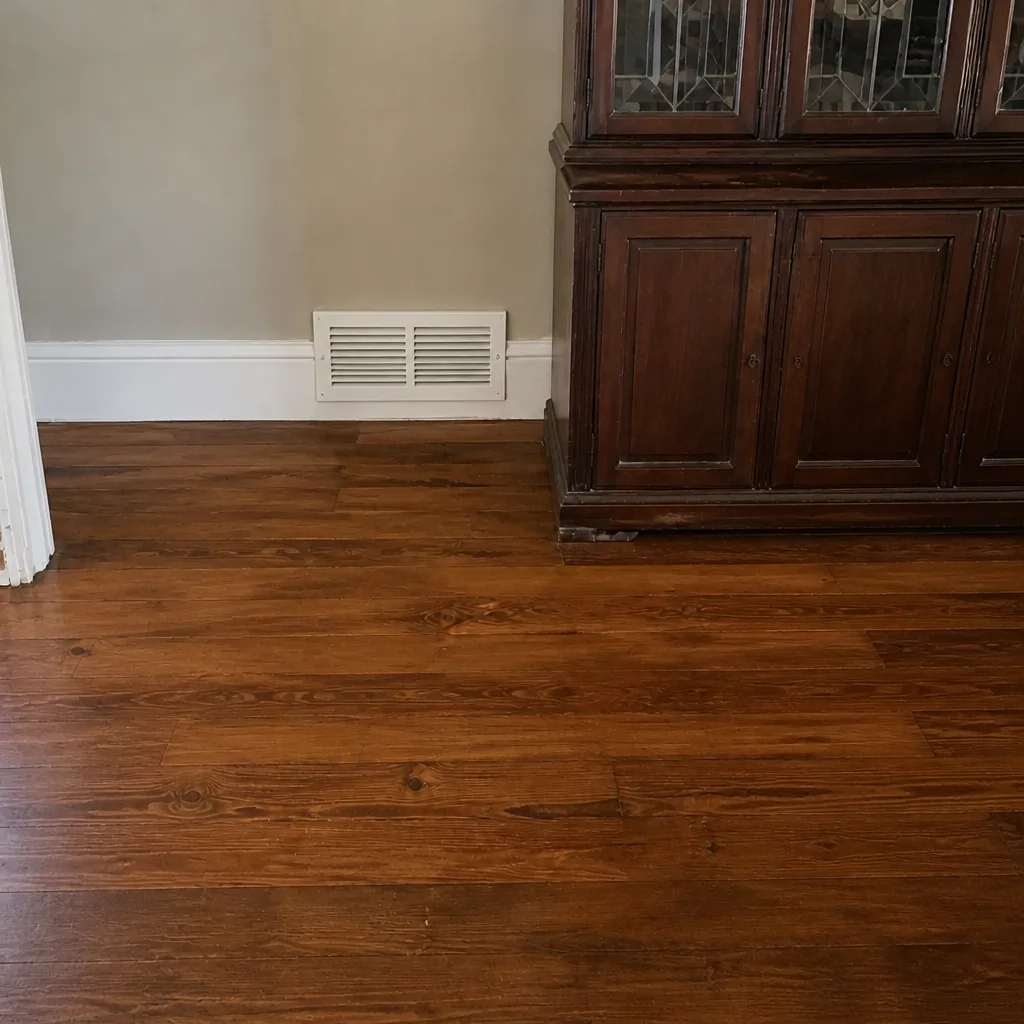
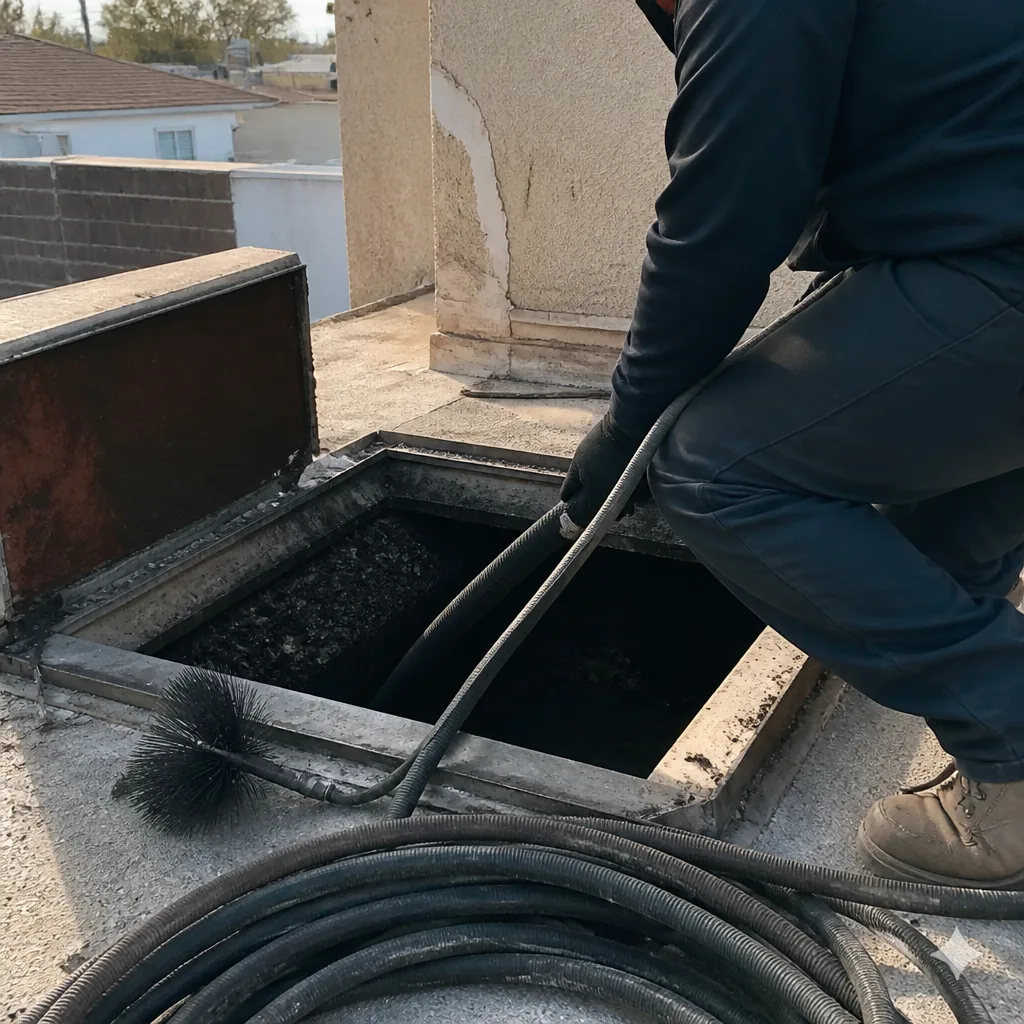
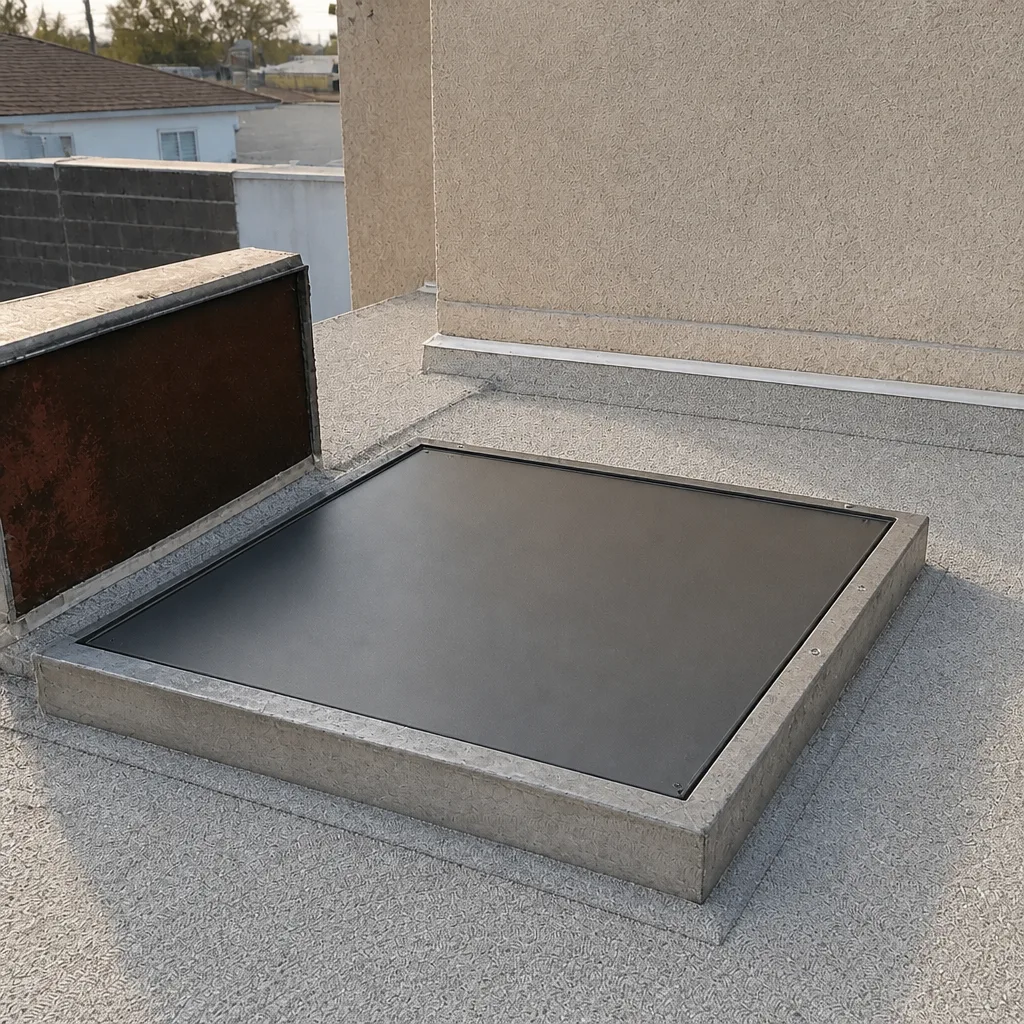
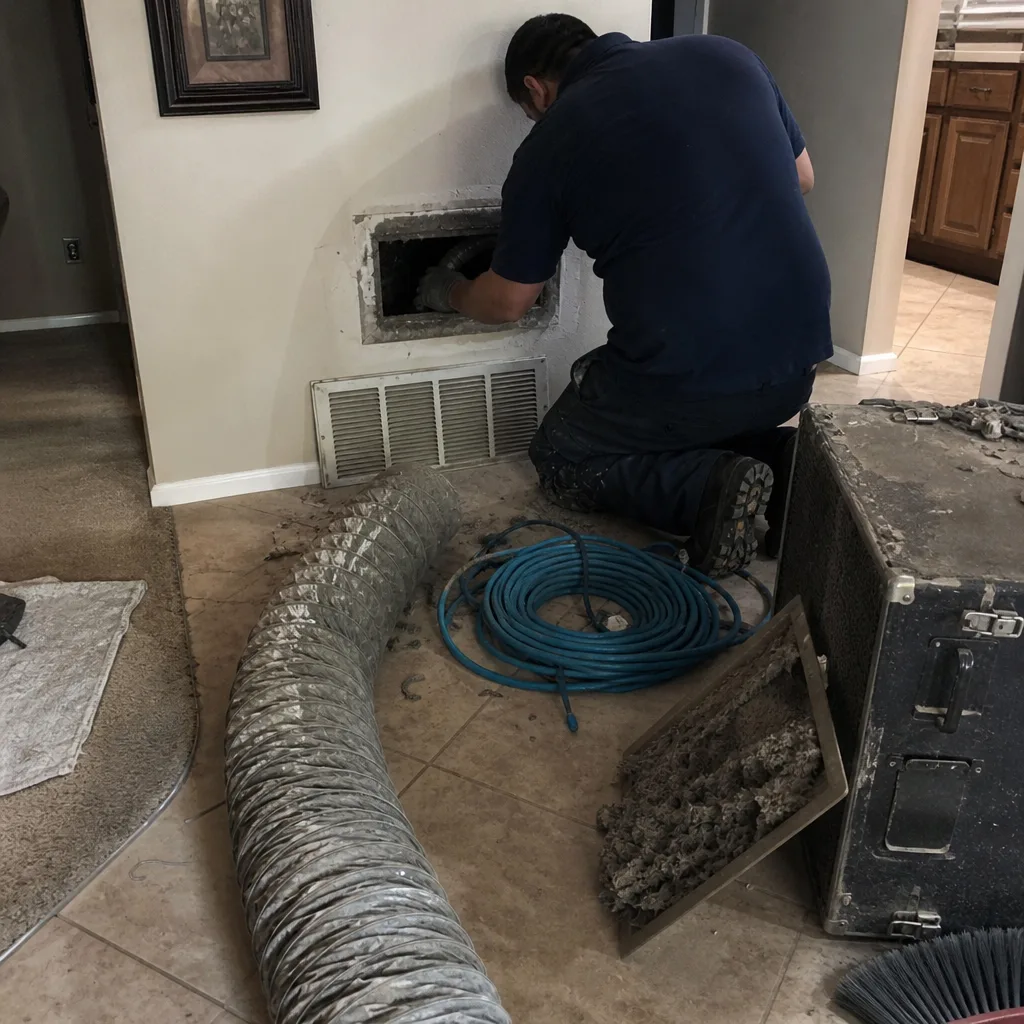
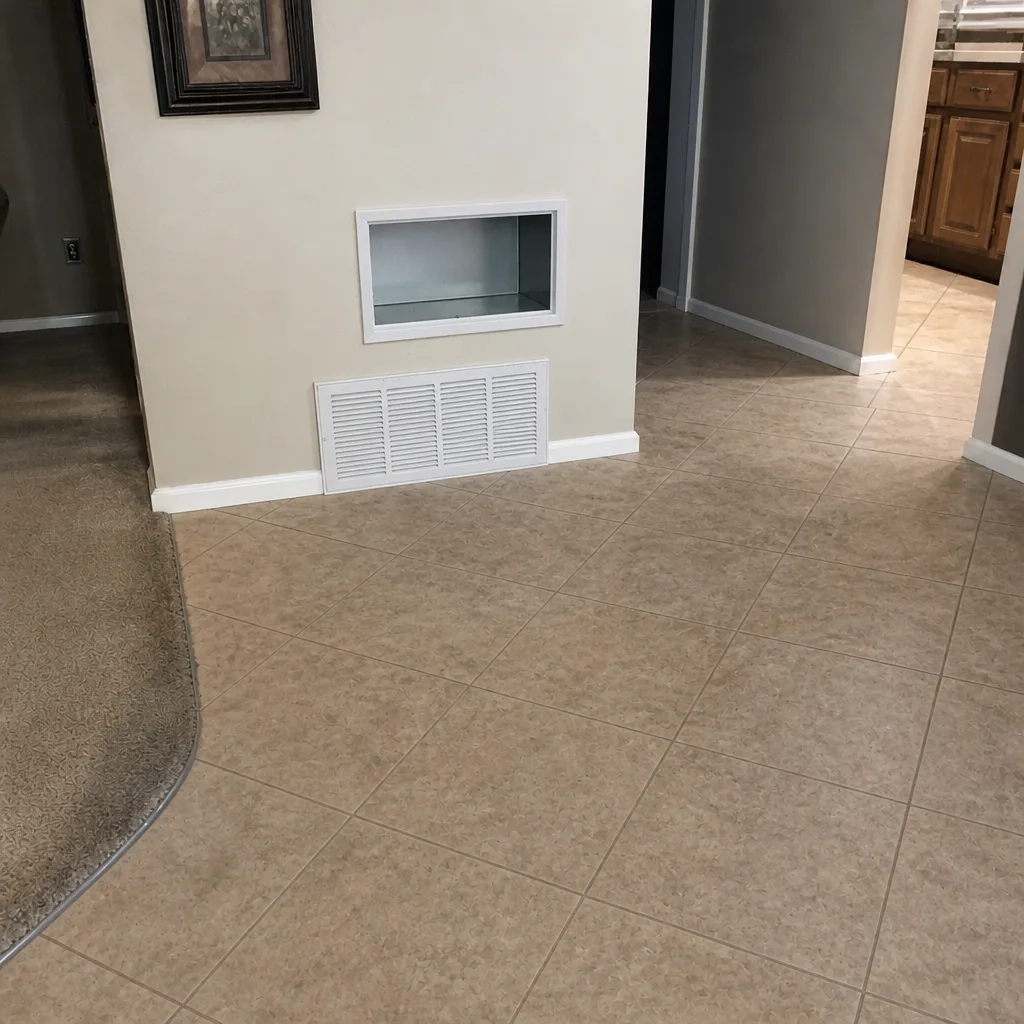
Whole-system duct and dryer vent check with before-and-after photos - you see exactly what came out of your vents
That "$99 whole-house special" is a bait ad - the real number appears once they are in your hallway, or the "clean" is a shop-vac at the register. We photograph the inside of your ducts before and after instead.
Air Duct Cleaning Maintenance Checklist for North Las Vegas Homeowners
A North Las Vegas air handler can log more operating hours between June and September than a Chicago system logs in an entire year. When your AC runs 14 hours a day through a 110-degree July, the dust, pet dander, and construction grit that settles in your ductwork doesn’t just sit there, it bakes, breaks down, and recirculates through every room. Most maintenance checklists you’ll find online are written for national averages, mild summers and short cooling seasons. That generic advice fails here. This guide replaces calendar-based guessing with a run-hour framework built specifically for how HVAC systems actually operate in North Las Vegas, so you’ll know exactly what to inspect, when to clean, and what documentation actually matters when you sell the house or file a warranty claim.
Quick Answer
Air duct maintenance in North Las Vegas should be scheduled around HVAC run-hours, not calendar months. Plan for a professional air duct cleaning after every 1,200 to 1,500 cooling hours, which for most desert households means every 2 to 3 years, plus a pre-summer inspection of coils, plenum, and flex duct joints every May. Replace standard 1-inch filters every 30 to 45 days during peak cooling season, and document every service with photos and reports for resale and warranty protection.
Styles & brands we work with
- Whole-home duct cleaning
- Dryer vent cleaning
- Camera inspection
- Sanitizing & deodorizing
Table of Contents
- Why Run-Hours Beat Calendar Months in North Las Vegas
- Pre-Summer Checklist: What to Inspect Before Peak Load
- Post-Monsoon Checklist: After August Wind Events
- Filter Upgrades: When a Higher MERV Actually Hurts
- How Often Should You Actually Clean the Ducts?
- Documentation That Matters for Resale and Warranty
- What You Can Check Yourself vs. What Needs a Specialist
- Common Mistakes to Avoid
- When to Call a Professional
- Frequently Asked Questions
Why Run-Hours Beat Calendar Months in North Las Vegas
The single biggest mistake homeowners make with duct maintenance is treating it like a spring-cleaning ritual with a fixed date. In a climate like ours, that approach falls apart quickly. The National Air Duct Cleaners Association suggests cleaning every 3 to 5 years, but that recommendation assumes a system running maybe 1,500 hours annually. A North Las Vegas air conditioner in a typical single-story home can run 2,500 to 3,500 hours per year. The math doesn’t translate.
Here’s the run-hour framework we recommend to customers across North Las Vegas:
- Track your cooling season. In the Las Vegas Valley, meaningful AC operation typically starts by late April and runs through late October. That’s roughly 180 days of real cooling load.
- Estimate daily run hours. During July and August, a system maintaining a 20-degree temperature difference from outdoor conditions often runs 12 to 14 hours per day. June and September sit closer to 8 to 10. April, May, and October run 4 to 6.
- Multiply for your total. A typical North Las Vegas household accumulates roughly 1,500 to 2,000 cooling hours per year. That means the industry’s “every 3 to 5 years” recommendation translates to a desert reality of every 1,200 to 1,500 hours, or about every 2 to 3 years for most homes here.
- Adjust for occupancy. Add 15 to 20 percent more hours if you have pets that shed, kids who track in desert dust, or anyone in the home with allergies. Subtract a bit if the house is empty part of the day and you set the thermostat to 85 while away.
- Use a smart thermostat. Most Nest and Ecobee units track daily run hours in their energy reports. That’s your best data point for scheduling maintenance without guessing.
Think of it like oil changes. A car driven 15,000 miles a year needs more frequent service than one driven 5,000. The same principle applies to your ducts. In our experience at Lancaster Duct Cleaning, the homes with the heaviest buildup are rarely the oldest ones, they’re the ones where the AC never cycles off from June to September.
Pre-Summer Checklist: What to Inspect Before Peak Load
By early May in North Las Vegas, you should walk through a specific list of inspections before the system starts running flat-out for the next five months. These are the items that fail early under sustained desert heat:
- Evaporator coil condition. A dirty coil reduces heat transfer and forces the system to run longer. If you can’t see visible coil fins through the access panel without caked dust, it’s time for service. Longer run times mean more air moving through the ducts, and more particles getting deposited.
- Plenum integrity. The supply plenum is the metal box where cooled air leaves the air handler. In North Las Vegas attics, these boxes expand and contract dramatically with temperature swings from 40 degrees in January to 140-plus degrees in July. Check for visible gaps at seams or tape that’s peeling away.
- Flex duct joints. Most suburban North Las Vegas homes use flexible ductwork running through attics. The zip ties and metal collars at each connection point can loosen over time. A five-minute visual inspection from your attic access can catch loose connections before they leak 20 percent of your cooled air into the attic.
- Return air filter housing. Make sure the filter sits flush in its slot with no gaps around the edges. Air bypasses a poorly seated filter and carries unfiltered dust straight into the blower and coils.
- Supply register flow. Close all doors and walk the house with the system running. Hold a tissue near each register. You’re checking for consistent airflow across rooms. A noticeably weak register often indicates a collapsed or disconnected duct branch.
The pre-summer inspection isn’t about doing all the work yourself. It’s about catching problems in April when appointment slots are open, rather than discovering a failed duct in August when every HVAC company in the valley is booked solid. We recommend handling the visual checks yourself and calling a specialist for anything that looks off. A professional air duct cleaning before the peak season also resets your system, so it starts the heavy run cycle without carrying a winter’s worth of accumulated dust.
Post-Monsoon Checklist: After August Wind Events
North Las Vegas gets a distinct seasonal event most national duct guides never mention: the late-summer monsoon pattern. From mid-July through September, afternoon winds kick up fine desert particulate and push it into every gap in your home. Combined with what’s already accumulated in the system, this is the period when duct interiors see their fastest buildup.
Here’s what to check after the heaviest wind events, typically late August into September:
- Inspect the filter two weeks after a major dust storm. A filter that was white in early August and looks tan-brown by late August tells you exactly what’s passing through your return. If it’s heavily loaded, the finer particles have already moved past it into the ductwork.
- Check supply registers for dust streaking. Dark streaks on the ceiling or wall around a supply vent are a sign dust is passing through the duct and being blown out under pressure. This is different from normal dust settling; streaking means the particles are moving with velocity.
- Walk the attic after high winds. Attic vents in many North Las Vegas homes allow fine dust to infiltrate during windstorms. That dust settles around duct runs and eventually gets pulled in through any small gap at joints or seams.
- Listen for new rattles or whistles. Wind-driven debris can shift a loose duct section or wear through a strap. New noises after a storm often mean something moved that shouldn’t have.
- Schedule cleaning if you missed the pre-summer appointment. Late September or October is a sensible second window. The monsoon dust has settled, the system is still running enough to make the cleaning worthwhile, and you go into winter with known-clean ducts.
The post-monsoon checklist matters because dust from desert wind events is exceptionally fine. It’s a different thing from household lint or pet hair. Fine dust with high mineral content works its way deeper into duct surfaces and clings more stubbornly. A system that looked acceptable in March can look significantly worse by October, even with regular filter changes.
Filter Upgrades: When a Higher MERV Actually Hurts
This section addresses a persistent piece of bad advice that circulates among well-meaning homeowners in North Las Vegas: that upgrading to the highest-MERV filter you can buy will protect your system and improve air quality. The reality depends on your ductwork.
MERV, or Minimum Efficiency Reporting Value, rates how many particles a filter captures at a given particle size. A basic fiberglass filter might be MERV 4. A typical pleated filter is MERV 8. The HEPA-adjacent filters sold at big-box stores run MERV 13 or higher.
The problem is airflow resistance. A MERV 13 filter is significantly denser than a MERV 8. In systems with original builder-spec returns, which describes most tract homes built in North Las Vegas over the last 20 years, the return air openings and duct sizing were designed around a low-resistance filter. Installing a dense MERV 13 filter creates high static pressure, which means:
- The blower motor works harder and may run hotter
- Total airflow through the system drops, reducing cooling capacity
- The evaporator coil can run too cold in low airflow conditions, potentially icing over
- Utility costs rise because the system runs longer to hit the thermostat setpoint
Here’s the decision point we recommend for North Las Vegas homeowners:
- Start with MERV 8. This captures the bulk of household dust, pet dander, and pollen. It’s the baseline for most systems and the right choice for homes with standard builder-spec ductwork.
- Consider MERV 11 if someone in the home has allergies or asthma. MERV 11 adds meaningful capture of finer particles while still working in most systems. Pair it with a 2-inch or 4-inch media cabinet if your air handler accepts one; thicker media means more surface area and less resistance at the same MERV rating.
- Only go MERV 13 or higher if a specialist confirms your system can handle it. This requires checking static pressure with a manometer, not guessing. Homes with undersized returns, which are common in North Las Vegas production housing, often can’t handle MERV 13 without equipment strain.
- Never jump four MERV levels at once. Going from MERV 4 to MERV 13 in a single step is how you ice a coil in July. Step up gradually and monitor for reduced airflow at the registers.
Our team works with the full range of air quality systems, including whole-home filtration setups from Honeywell, and we regularly see homes in North Las Vegas where the system’s return capacity, not the owner’s air quality preferences, determines what filter belongs in the slot. If you want better filtration without choking the system, talk to a specialist before spending on the highest number on the shelf.
How Often Should You Actually Clean the Ducts?
The honest answer for North Las Vegas is that no single interval fits every home. Here’s a breakdown by household type that reflects what we actually see in the field:
- Two adults, no pets, mostly hard-surface floors: every 3 to 4 years. Dust input into the system is lower, and a good filter catches most of what enters. This household reaches 1,500 run-hours slower than any other category.
- Family with kids and one or two pets, mixed carpet and tile: every 2 to 3 years. Kids bring in desert dust from school playgrounds and backyards. Pets shed continuously. Carpet fibers generate their own particulate. This is the average North Las Vegas household.
- Multiple pets, kids, recent renovation, or a family member with respiratory issues: every 18 months to 2 years. Renovation dust is a major driver here. North Las Vegas has seen steady new construction and countless flip remodels over the last decade, and that dust settles everywhere, including inside ducts.
- New construction purchase: within the first year of occupancy. Builders don’t seal ducts during construction in most North Las Vegas developments. Drywall dust, sawdust, and debris accumulate during the build and the system blows it through the house from day one. A first-year cleaning addresses what many homeowners mistake for “new house smell.”
- After any major equipment replacement: if you replace the air handler or furnace, schedule a duct cleaning before the new unit goes online. You don’t want a new blower pulling through old duct contamination.
The run-hour framework works for all these categories. A two-adult home with a small, efficient system may hit 1,500 hours in three years. A large single-story home with vaulted ceilings and three sliding glass doors may hit it in 20 months. Track your run hours through your thermostat and use that data to set your own interval.
What does a North Las Vegas air duct cleaning actually involve? The process we use pairs a Rotobrush rotating brush system with Nikro HEPA-rated vacuums. The rotating brush physically dislodges debris from the duct walls while the vacuum maintains negative pressure to capture it immediately. That’s the key distinction: debris is removed, not redistributed. Systems that only blow air through ducts without a brush step often push some particulate deeper or simply into the room air. The brush-and-extract method is what the name implies, and it’s the approach that produces visible before-and-after results.
Documentation That Matters for Resale and Warranty
This is the section most checklists skip, and in North Las Vegas it carries real financial weight. Our real estate market moves fast, and buyers increasingly ask about indoor air quality and system condition. Here’s what to keep:
- Before-and-after photos. Any professional duct cleaning should include photos of the duct interior before and after service. These images demonstrate that work was actually performed and show the condition of the system. Save them with your home maintenance records. They matter at resale because they answer the buyer’s implicit question: has this system been maintained?
- Service reports with dates. Keep the invoices and work descriptions from every duct cleaning, dryer vent cleaning, and duct repair. Show the date, the scope of work, and the equipment used. A consistent paper trail suggests the rest of the home was maintained with similar care.
- Filter change log. A simple spreadsheet with dates of filter replacements takes five minutes a year to maintain and provides evidence of ongoing care. If you’re disciplined about it, include the filter brand, MERV rating, and cost.
- Duct repair documentation. If you’ve had leaky or collapsed duct sections repaired, keep the report. Buyers and home inspectors will ask about visible repairs in the attic. A professional report from a company that does air duct cleaning and repair clarifies what was addressed and when.
- Equipment warranty paperwork. Guard the warranty documents for your air handler, furnace, and any whole-home air quality equipment. Some manufacturer warranties are voidable if the system wasn’t maintained to a reasonable standard. Your service records are the evidence you maintained it.
- Home warranty claim notes. If your home is covered by a home warranty company, know what they require for duct-related claims. Many policies specifically require professional cleaning and documentation before honoring a repair claim on ductwork.
In North Las Vegas, where resale activity has been steady for years, good documentation converts to negotiation leverage. You can point to a record that says the ducts were cleaned, photographed, and verified rather than saying you think you had it done a while back.
What You Can Check Yourself vs. What Needs a Specialist
There’s a clear line between reasonable homeowner inspection and work that belongs with a professional. On the DIY side, these items are safe and useful for any North Las Vegas homeowner:
- Visual filter inspection every 30 days during cooling season. Pull the filter, hold it to a light, and replace if you can’t see light through it clearly.
- Register airflow test using a tissue or thin paper strip at each supply vent. You’re looking for consistency, not absolute volume.
- Visible duct inspection from the attic access hatch. Look for sagging flex ducts, disconnected joints, or visible dust accumulation at the connection points.
- Return air grille cleaning. Vacuum the return grille face and wipe down the surrounding wall. This is where the most visible dust collects and it’s a five-minute monthly task.
- Thermostat run-hour tracking. Use your smart thermostat’s energy reports to log system hours. This is your best data for scheduling future service.
What should you leave to a professional? Anything that involves getting inside the ductwork itself, or any repair task that requires opening the system. Specific examples:
- Duct interior cleaning. The Rotobrush and Nikro equipment we use reaches the full interior surface of every duct run. A homeowner with a shop vacuum can clean the first 12 inches of a supply register, but not the 30 feet of duct between the register and the plenum. The bulk of the contamination is in that middle section.
- Plenum inspection and repair. The supply plenum sits at the heart of the system. If there’s a gap or leak there, it’s the most expensive leak you have. Opening and resealing it properly requires the right materials and technique.
- Flex duct replacement or repair. Collapsed duct runs, torn inner liners, and failed connections need tools and materials beyond what most homeowners keep. A company that does air duct cleaning and repair can address this in one visit rather than sending you to a second trade.
- Dryer vent cleaning. This is a separate system from your HVAC ducts, and it’s the one with a genuine fire-safety component. Lint accumulation in the vent line is a leading cause of residential dryer fires. Professional dryer vent cleaning removes built-up lint from the full length of the vent run, including sections you can’t reach from either end.
The containment approach matters here too. Proper air duct cleaning uses negative-air-pressure equipment, the same principle Abatement Technologies applies in professional remediation work, to keep dislodged dust from migrating into living spaces during service. A homeowner vacuuming a duct from one end can inadvertently push dust deeper or blow it out the other end.
Common Mistakes to Avoid
- Scheduling by calendar date instead of run-hours. Two homes in North Las Vegas can have wildly different operating loads depending on thermostat settings, insulation, and household size. A calendar-based schedule ignores the actual wear on the system.
- Installing a high-MERV filter without checking static pressure. The most common upgrade mistake we see is a MERV 13 filter in a system with builder-spec returns. It reduces airflow, increases run time, and can damage the blower over time.
- Ignoring the dryer vent because the HVAC ducts were cleaned. They’re separate systems. Cleaning your HVAC ducts does nothing for the lint packed into your dryer vent. Both need independent attention.
- Skipping the pre-summer inspection because the system worked fine last year. Desert conditions degrade connections, joints, and materials continuously. Last year’s performance doesn’t guarantee this year’s.
- Hiring the cheapest bid without asking about equipment or method. A company that uses a shop vacuum and a brush thrown down the register is not doing the same job as one that uses a rotating brush system with HEPA extraction. Ask what equipment they bring and how they contain the debris.
- Failing to document service. Cleaning without photos and a written report gives you nothing to show a buyer, a home inspector, or a warranty company later.
- Wait-and-see on airflow problems. A weak register, a new whistling sound, or a hot room that used to cool fine all indicate a duct problem. These don’t fix themselves, and every week of operation makes them worse.
When to Call a Professional
Some things belong on your inspection list. Others mean it’s time to bring in a specialist. Call a professional duct specialist if you notice visible dust streaking around supply registers, meaning dust is being blown out under pressure, a persistent musty or dusty smell when the system runs that doesn’t resolve with a filter change, rooms that have never cooled properly despite a new AC system, or duct sections in the attic that are visibly sagging, disconnected, or crushed. If you’ve completed a renovation, moved into a new construction home, or inherited a house with no service records, schedule a cleaning as your starting point.
Lancaster Duct Cleaning offers free estimates in North Las Vegas. Call (866) 942-9753. We answer 24/7. Fast dispatch from 7am to 7pm, Sunday through Friday.
Frequently Asked Questions
How much does air duct cleaning cost in North Las Vegas?
Air duct cleaning for a typical single-family home in North Las Vegas generally falls between $400 and $800, depending on the number of systems, the linear feet of ductwork, and the level of contamination. Homes with two separate HVAC systems, which are common in larger two-story properties here, run higher. The written estimate sets the final price before any work begins. Call (866) 942-9753 for an exact quote, estimates are free.
How do I know if my ducts actually need cleaning?
The clearest indicators are visible dust streaking around supply registers, a persistent dusty odor when the system cycles on, significantly reduced airflow in specific rooms, or a filter that becomes heavily loaded within two weeks of replacement. If you’ve recently purchased a new construction home in North Las Vegas, schedule a cleaning within the first year; builders rarely seal ducts during construction, and construction dust is nearly universal in those systems. We answer 24/7. Fast dispatch from 7am to 7pm, Sunday through Friday.
Why are some duct cleaning quotes so much cheaper?
The price difference almost always comes down to equipment and method. A company offering duct cleaning for $99 is typically using a small portable vacuum and a hand brush, which reaches only the first few feet of duct from each register. The Rotobrush and Nikro system we use at Lancaster Duct Cleaning rotates a brush through the full interior length while a HEPA-rated vacuum maintains negative pressure to extract the debris immediately. The work is fundamentally different, and the results are too. You can’t clean a duct you can’t reach, and a $99 visit doesn’t reach much.
How do I know the work was actually done?
Demand before-and-after photos. Any legitimate duct cleaning company can photograph the duct interior at the start and end of service and show you the difference. If a company can’t produce photos, you have no verification that anything changed. At Lancaster Duct Cleaning, the documentation is part of the service. We recommend keeping the photos and the service report with your home records for future resale and warranty claims.
Is duct cleaning worth doing before selling a house in North Las Vegas?
In our experience, it can strengthen your position in two ways. First, a documented cleaning with before-and-after photos answers a buyer’s questions before they become objections during inspection. Second, it demonstrates that the home has been maintained rather than deferred. In a market like North Las Vegas where buyers move quickly, anything you can hand over that removes doubt gives you negotiation leverage. Call (866) 942-9753 to schedule before you list, estimates are free.
Can I upgrade my filter to improve air quality without hurting my system?
It depends on your ductwork. If your home has original builder-spec returns, which is common in North Las Vegas production housing, a move from MERV 8 to MERV 13 may create enough airflow resistance to reduce cooling capacity and strain the blower. A safer upgrade path is stepping to MERV 11, using a thicker media cabinet if your air handler accepts one, and having a specialist measure static pressure before going higher. The filter has to match the system, not just the marketing on the package.
The Bottom Line
Duct maintenance in North Las Vegas rewards homeowners who think in run-hours rather than calendar pages. Your system works harder here than it would in most of the country, which means it accumulates dust faster and needs attention sooner than generic advice suggests. The routine is straightforward: track your system’s operating hours, inspect the plenum and flex ducts before the summer peak, check for monsoon dust buildup in late summer, be deliberate about filter upgrades, and document everything. When it’s time for service, use a company that names its equipment and explains its method. You want debris removed, not redistributed, and you want the work photographed so you know what changed. Schedule before the peak season when possible.
Written by the team at Lancaster Duct Cleaning, serving North Las Vegas since 2013.
See the difference
 Before
 After
 Before
 After
 Before
 After